

Banking leaders examine how resilience, legacy pressures and AI readiness are reshaping the technology agenda for the next generation of banking.
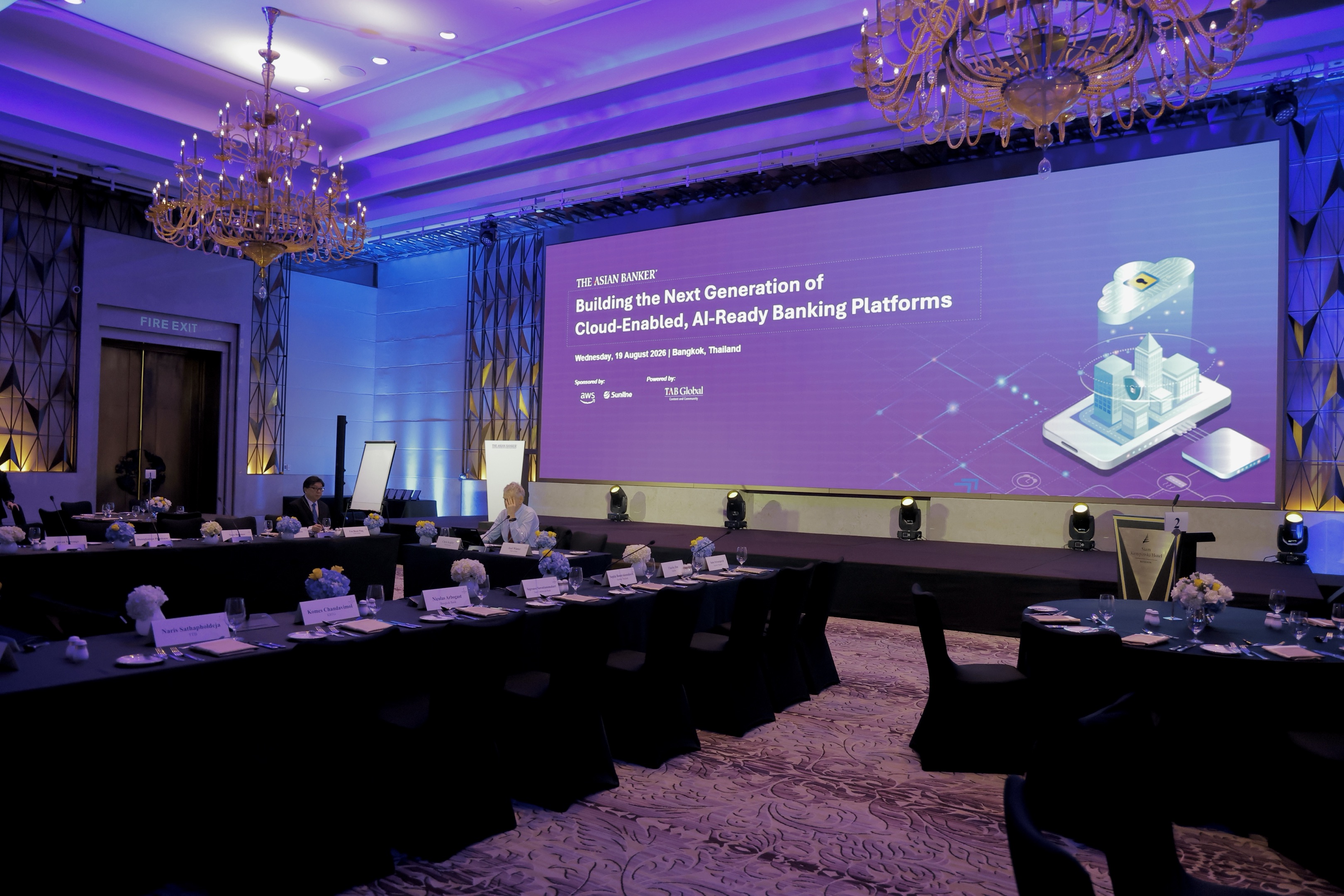
BANGKOK, Thailand, 19 August 2026 - Amazon Web Services (AWS), in partnership with Sunline, convened banking leaders at The Asian Banker Thailand Awards 2026 for an Executive Roundtable on “Next-Gen Cloud-Enabled, AI-Ready Banking Platforms.”
Moderated by Christian “Chris” Kapfer, Head of Research at The Asian Banker, and Axel Winter, International Resource Director, the discussion explored a question becoming increasingly consequential for financial institutions: how to build the capacity to evolve while preserving the resilience, control and continuity required of mission-critical banking.
The conversation brought together perspectives on legacy technology, scalability, transformation risk and the foundations required for enterprise AI, pointing to a broader shift in how banks are approaching core modernisation.
Legacy Pressure Is Becoming A Business Resilience Issue
Legacy systems continue to underpin critical banking operations. The challenge is increasingly the environment around them.
Banking leaders highlighted four interconnected pressures: talent continuity, cost, speed to market and scalability. Legacy expertise is becoming harder to sustain, established environments remain costly to operate and change, while growing digital expectations are placing greater demands on how quickly banks can launch, integrate and scale.
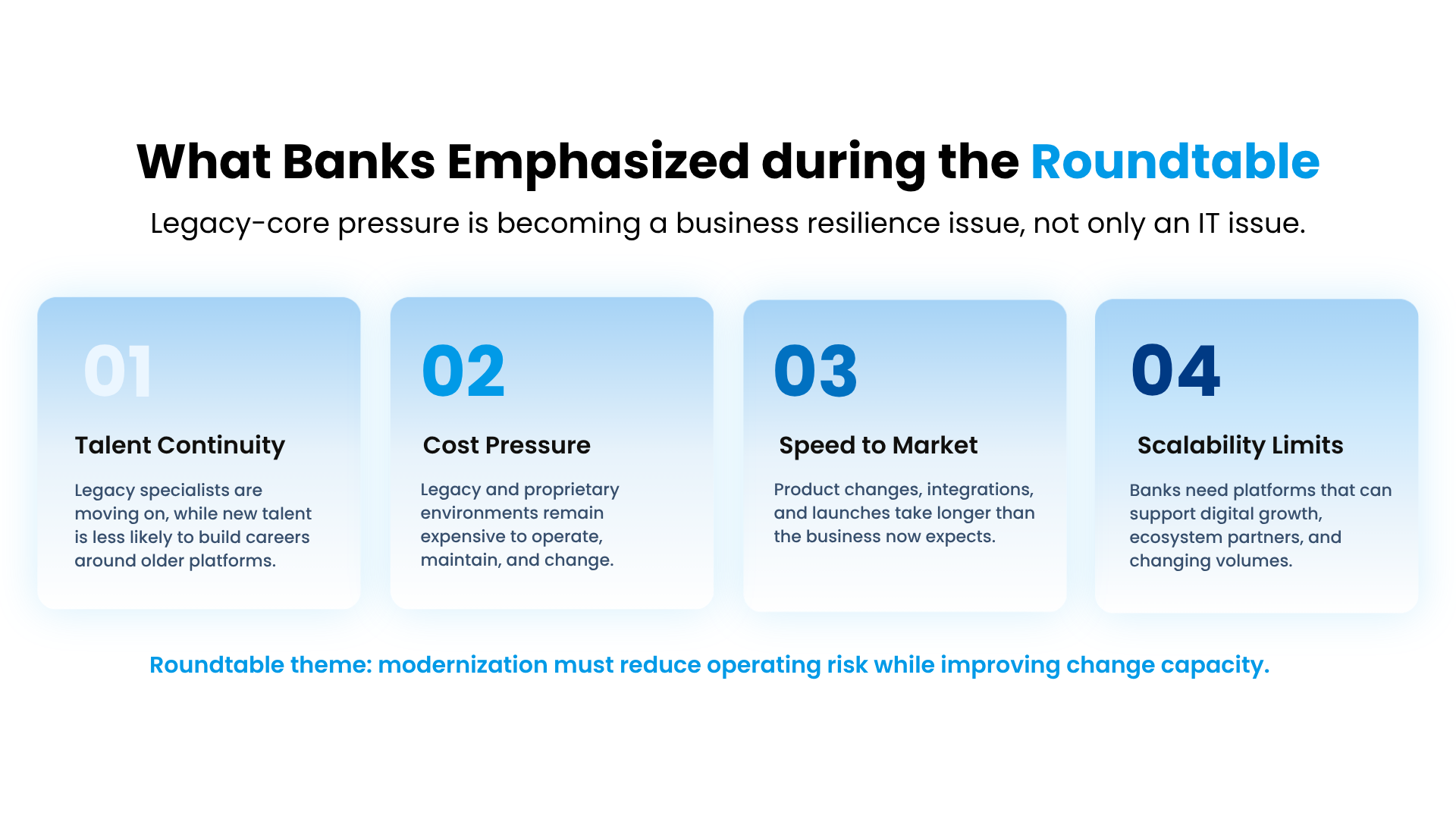
Figure 1. Key legacy-core pressures highlighted by banking leaders during the executive roundtable.
Taken individually, these can appear to be separate operational challenges. Collectively, they point to a more structural question: whether the bank’s technology foundation can continue to support the pace and direction in which the institution needs to evolve.
This is moving core modernisation beyond a conventional infrastructure renewal programme and closer to the strategic agenda of the bank.
From System Replacement to Change Capacity
For Sunline, the implications extend beyond the question of when to replace a legacy core. Stability and control remain fundamental to banking. But institutions increasingly need those qualities alongside greater adaptability, scalability and the ability to change continuously.
Charley Dou of Sunline highlighted that this makes modernisation as much a question of long-term change capacity as technology architecture.

“Modernisation is not one model for every institution. The strategic question is how banks create greater capacity to evolve without compromising the resilience on which their business depends. The right approach must reflect each institution’s complexity, risk appetite and business priorities.”
Charley Dou, Solutions Expert, Sunline
Rather than forcing every institution towards the same transformation model, banks can consider different routes according to their starting point and priorities. Some may pursue a more direct replacement, while others may benefit from progressive migration or a period of coexistence between legacy and modern environments.
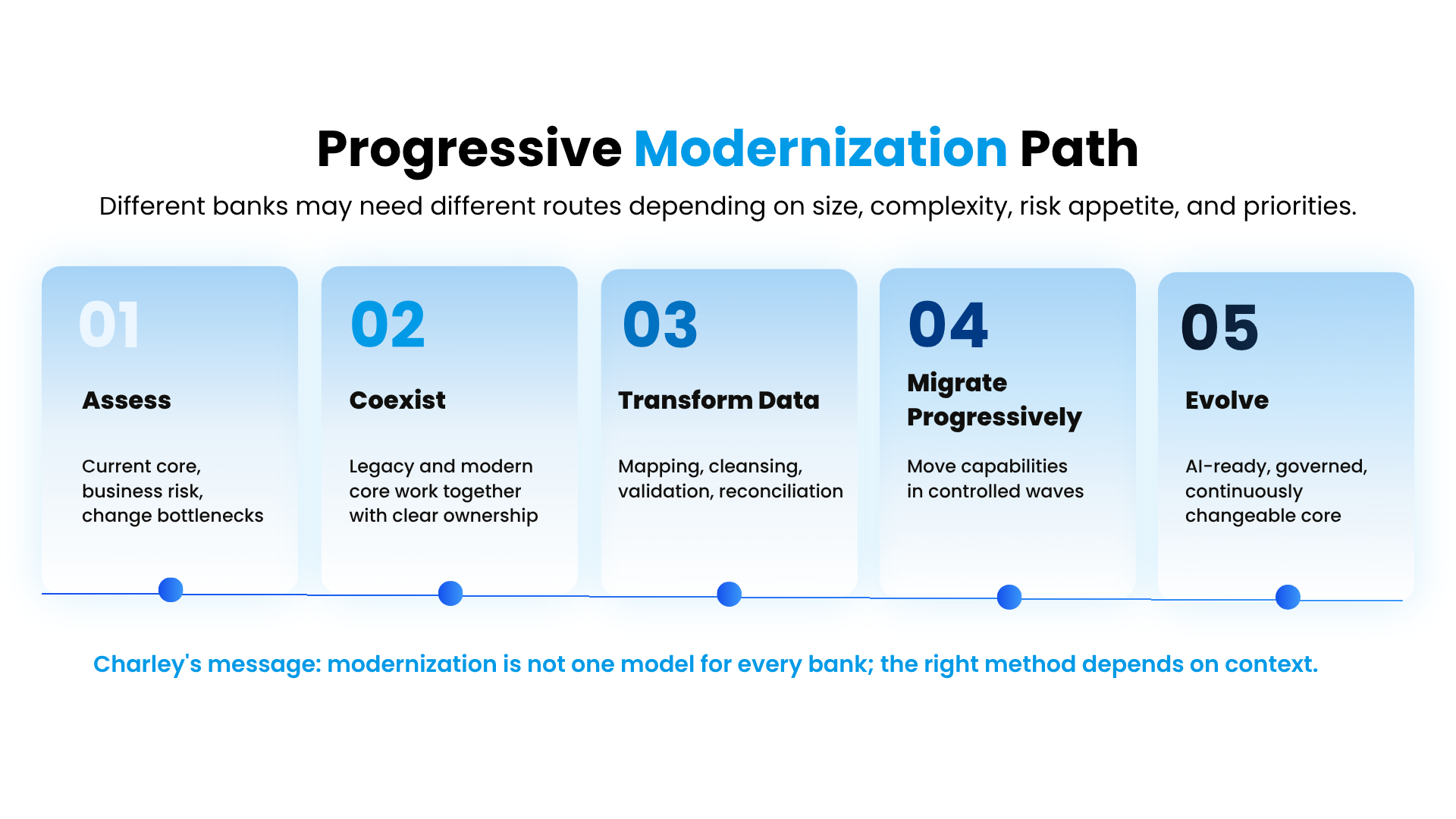
Figure 2. A progressive modernisation approach can help banks manage transformation risk while building greater capacity for change.
The significance of a progressive approach is not simply that transformation can happen in stages. It is that banks can align the pace of change with their operational readiness and risk profile. That places greater emphasis on how the transition is governed, not only on the target architecture.
Execution Becomes Part of the Strategy
Coexistence between legacy and modern environments introduces its own complexity. Clear architecture, reliable integration, data synchronisation, reconciliation and operational ownership become critical when two environments need to operate simultaneously.
The same applies to data transformation. Migration cannot be reduced to the technical movement of data. Mapping, cleansing, validation, reconciliation, cutover planning and rollback readiness all contribute to whether the transition can be executed without compromising business continuity.
Drawing on Sunline’s experience in Thailand, Sutee emphasised the importance of execution discipline in translating modernisation strategy into operational outcomes.

“Successful modernisation depends on more than the technology itself. A clear roadmap, realistic migration stages, strong data governance and continuous business validation are essential to moving forward while maintaining control over business continuity, data integrity and customer impact.”
Sutee Srivorapetch, Sunline Thailand
This experience points to an important distinction: modernisation risk is not managed by slowing transformation, but by structuring transformation in a way that allows change to happen with control.
AI Readiness Starts with the Foundations Beneath It
AI adds greater urgency to this conversation. Banks are increasingly exploring how AI can improve productivity, customer insight, business intelligence and decision-making. Yet moving from experimentation to meaningful enterprise adoption places greater demands on the foundations beneath those capabilities.
Trusted data, clear governance and reliable systems of record become more important as AI moves deeper into banking processes. Without those foundations, AI can introduce another layer of complexity rather than create sustainable value.
This creates a direct connection between core modernisation, data modernisation and AI readiness. They are increasingly not separate technology agendas, but interconnected elements of how banks prepare their institutions for the next phase of change.
Building the Capacity to Evolve
The discussion in Bangkok underscored a broader shift in the modernisation agenda. Core transformation is no longer simply about replacing ageing technology. It is about reducing structural constraints while strengthening the resilience and adaptability of the institution.
There is no universal path forward. Modernisation can be progressive, coexistence can be governed, and migration risk can be managed through clear methodology, strong governance and disciplined execution.
Through its partnership with AWS, Sunline continues to engage financial institutions on how these foundations can support the next generation of resilient, scalable and AI-ready banking.
Ultimately, the future of core banking will not be defined by technology replacement alone. It will be defined by whether banks have the capacity to evolve continuously, confidently and at the pace their markets demand.